
Escape the Matrix: How to Lead a Conscious Life: The Issue Is that We Are All Conditioned

Scientists tell us that the planet Earth is 5 billion years old. It’s already been through numerous transformations. Life in various forms has arisen and fallen, from the earliest one celled organisms, through various geological periods, often disrupted through cataclysmic events. Dinosaurs and their earlier predecessors were wiped out what? 60 million years ago, and mammals managed to survive.
Ultimately resulting in things like dolphins, whales in the oceans, and primates, such as monkeys, chimpanzees, orangutangs, and ourselves. One way or another we are the result of 5 billion years of chemical and DNA transmission. And we live in an incredibly narrow environment, where there is little variation in temperature, chemical composition of the atmosphere with not too little and not too much oxygen, nitrogen, carbon dioxide, etc.
Out of millions, then hundreds of thousands, then thousands, hundreds, decades, suddenly this particular manifestation of “Universal Consciousness” has arisen. The paradox is that on the one hand it operates by automatic pilot, from previous causes and conditions. And yet, somehow it adapts and changes. So we are the result of that interplay of unconscious conditioning, and conscious choices that have somehow, inconceivably occurred.
The question is, when our very existence is under stress, how do we adapt and make the change, or do we go the way of the dinosaurs? Some humans are overtaken by the idea of manipulation and control, and try to merely make changes in the physical realm, and, not taking into account their own mental, psychological and spiritual conditioning, fall into the trap of individual consciousness, selfishness, and their attending malfunctions. And too often such individuals gain control of whole groups of people and societies.
“If you think one strange thought, people will think your crazy. If you can convince 100 people, it is a cult. If you attract a million people, it’s a religion or a political movement, or even a country”.
In some cases the thought will be useful and wholesome but in other cases where the leader gets control of people’s thoughts, it goes astray. “Convince people of an absurdity, and you can convince them to commit atrocities”.
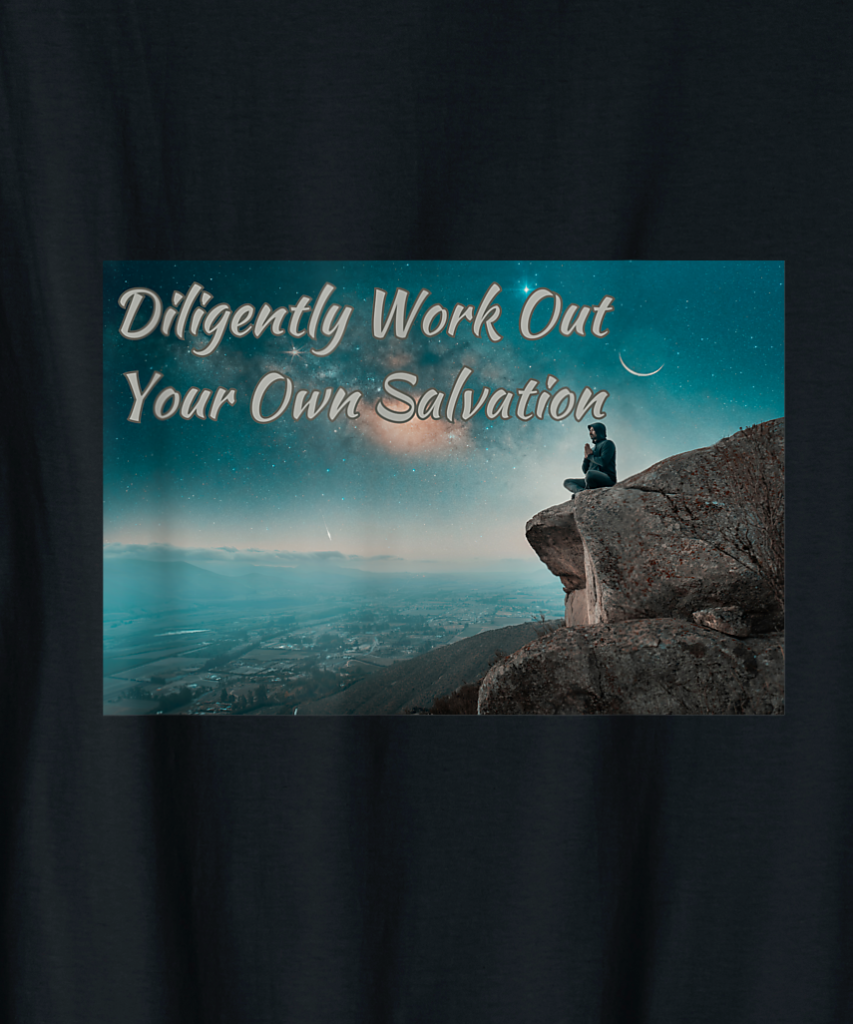
How to Protect Ourselves and Overcome Our Conditioning
There is good conditioning and bad conditioning. As children, first we are given a name, and then training on how to interact with others, and survive. Crossing the street in traffic can lead to early death. Learning skills that allow us to support ourselves is another form of useful ‘programming’.
When Cultural Programming Became Systemic Programming
Programming, or conditioning has been implicit in human society from the beginning. Even pre industrial societies had ‘taboos’ and spiritual laws such as the Ten Commandments or Five Precepts to allow humans to live together. The problem that has arisen in the last century, is that superstructures in government and business have created a system of social control through propaganda, also known as public relations, and ‘perception management’.
They control not just our thought process but even our physical bodies. It’s no accident that in the 1950’s television programming was called ‘a vast wasteland’. Television and cable are replaced by online social media. Social media does offer alternative viewpoints and ‘citizen journalism’, which is a good thing. But powerful interests also have significant control. What’s more important is that people read a lot less, and watch extremely short content which shortens attention span. That limits our ability to process or evaluate what goes into our brains.
Equally damaging is the push by food corporations such as McDonald’s.
Is there any correlation between rise in obesity and diabetes and other health problems with takeover of fast food as a major source of people’s diet? Please show tables of these phenomena? (Answer via Kimi.ai)
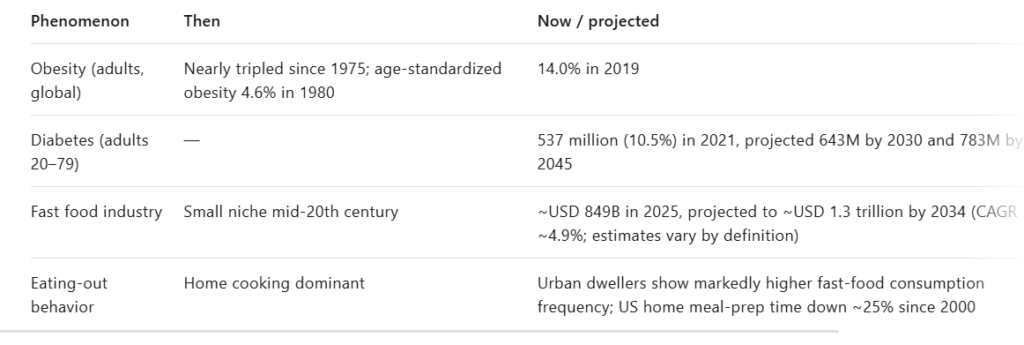
In summary, unwholesome programming consists of two forms. First, mental habits that don’t serve us. Compulsiveness, short temper, greed, unbalanced selfishness, mental fragmentation, which separates us from reality in the moment. Second, is programming or conditioning from outside ourselves, notably by society, and those who ‘control the narrative’.
The Cure for All of This is Mindful Awareness
There are several mental habits that we need to cultivate. First, be careful what you consume, both mentally and as food. (With a bow to Zen Master, Thich Naht Hahn)
- Watch what you put into your body. Are you eating mindlessly, compulsively to fill ‘the emotional emptiness’ inside? This includes most of the snack foods that shout out to us from supermarket colorful packaging. When you’re out and about or shopping. Be real careful about what catches your attention. Take time to read the ingredients. Packaged foods have large amounts of extra sugar or artificial sweeteners, preservatives, stabilizers, emulsifiers, flavor enhancers, and so on. Avoid them. Try to get food as close to the source as you can. I personally buy much of my food from the local markets, unpackaged. Fresh fruits, vegetables, fish, meat, eggs, tofu, grains, beans are all available unpackaged and less expensive than supermarket packaged versions.
- Watch what you put into your mind. Two things to avoid are pornography and violence. Who doesn’t like romance or adventure, but you can become mentally addicted to some types of entertainment. Mindless entertainment can be a respite, but has mostly become an escape from real life. I personally like entertainment that also teaches me something, or encourages thoughtful reflection. The two movies above, My Dinner with Andre, and The Matrix have had longlasting positive effects. Robin Williams made several great movies, such as Patch Adams, Goodwill Hunting, Good Morning Vietnam. Things like that.
- Kill your television ““the goal of TV programs is to get you to consume as much as possible so you are exposed the maximum amount of advertising you will tolerate. Thus television is by its very nature is designed to be addictive.” The same goes for social media. Look for ways to spend time that don’t require your mobile phone, which is highly addictive. (Example: Swimming, walking, exercise)
Next, develop these mental/emotional skills:
- Introspection. Take a look in the mirror. What are you thinking? What is your real motivation? Is it based on good qualities or selfish drives? If you harbor thoughts that transform into harmful actions, sooner or later you’ll pay for it. Perhaps the best historical example of this was Jesus on the cross, “God forgive them, for they don’t know what they’re doing”. Ask yourself, “What am I doing..what am I thinking, how do I feel” Centuries later, a US soldier in Vietnam said, “We had to destroy the village to save it”. Did he ask the villagers their opinion? What was he thinking? You can catch yourself from compulsive or obsessive behavior by observing yourself. It’s sometimes called ‘The Still Small Voice’ of Conscience.
- Empathy. It’s one thing to be cut off from our own thought process. A serious tendency nowadays is to objectify others. We don’t consider how other people feel. If someone does something that we don’t like, we should consider why they did it. It maybe right or not, but at least try to understand people from their point of view.
- Critical Thinking. In getting back control of our lives, we need to carefully consider what we are told. We’re flooded with information, much of which is either distorted or outright lies. The major news networks are especially unreliable. Much of what is propagated on social media is fake and spread electronically, not be real people. Ask two questions: Is that really true? And, who benefits. Next, do your own fact checking. Nowadays this is not easy. I can go to an original source. But the truth has been suppressed so much that if you even ask an AI website, it will try to convince you of an untruth. Or omit critical information that is inconvenient to those in power who must control the narrative.
These words, spoken 2500 years ago, are just as relevant today, as they were then. Yes, people are confused by all sorts of conflicting claims about what is true or false, right or wrong, good and bad. Here is the antidote:
“It is proper for you, Kalamas, to doubt, to be uncertain; uncertainty has arisen in you about what is doubtful. Come, Kalamas. Do not go upon what has been acquired by repeated hearing; nor upon tradition; nor upon rumor; nor upon what is in a scripture; nor upon surmise; nor upon an axiom; nor upon specious reasoning; nor upon a bias towards a notion that has been pondered over; nor upon another’s seeming ability; nor upon the consideration, ‘The monk is our teacher.’ Kalamas, when you yourselves know: ‘These things are bad; these things are blamable; these things are censured by the wise; undertaken and observed, these things lead to harm and ill,’ abandon them.
“Come, Kalamas. Do not go upon what has been acquired by repeated hearing; nor upon tradition; nor upon rumor; nor upon what is in a scripture; nor upon surmise; nor upon an axiom; nor upon specious reasoning; nor upon a bias towards a notion that has been pondered over; nor upon another’s seeming ability; nor upon the consideration, ‘The monk is our teacher.’ Kalamas, when you yourselves know: ‘These things are good; these things are not blamable; these things are praised by the wise; undertaken and observed, these things lead to benefit and happiness,’ enter on and abide in them.
Two Useful Mental Activities
Wise reflection. Become a thoughtful person. Before doing any action, consider your motivations and the possible consequences. This can be a simple as protecting yourself from impulse buying by asking, “Do I really need this”? Or if someone triggers you on social media, restrain yourself from reacting. And if some event occurs in life, watch your emotional reaction. Will it be useful, do you need to hold off, calm down and consider the right course of action. If it is with you and another person, consider whether your response will be helpful to both you and the other person. Be willing to make mistakes but own them, and don’t be afraid to apologize.
Make sitting meditation a habit. It will calm you down physiologically and psychologically. Any method will work, from any religious tradition or none. Breath counting, prayer, manta repetition, are all useful. Whatever method you like, all good.
Here in Chiang Mai, there are a number of places where you can go and practice with others, often under the guidance or coaching of a teacher, or long time practitioner. Consider taking a break of a few days or longer, to take stock of your life.
What do you really want, what do you really care about. This is sovereignty. This is your own escape from the Matrix. But remember that just taking a red pill, or a mushroom or other mind altering medicine, or taking an action one time will resolve it. Make free inquiry, leading a careful life is a lifelong process. Think of yourself as an artwork in progress.